
The Personal Ecology of Change
What Earth’s Mass Extinctions Teach Us About Becoming Someone New

Earth has an old habit: it reinvents itself. Not gently, not politely, and rarely on anyone’s preferred timeline.
Across deep time, life has been disrupted by at least five “mass extinctions”, intervals when biodiversity drops sharply and the rules of survival get rewritten. And here’s the part that matters for us: mass extinction is not the opposite of life. It’s the brutal editor that clears a page for the next chapter.
When people go through major transitions, a similar ecology is at work. Careers end. Relationships reorganize. Identities that once fit start pinching like shoes in the wrong size. The old “ecosystem” of your life collapses, and you are asked to build a new one with unfamiliar ingredients.
This is a map of that terrain: a way to use Earth’s extinction-and-recovery cycles as a framework for personal transformation, without romanticizing pain or turning geology into a self-help poster.
What “Mass Extinction” Actually Means
In Earth science, “mass extinction” refers to a geologically short period when a large percentage of species disappear across many environments. Scientists commonly refer to the “Big Five” events: End-Ordovician, Late Devonian, Permian-Triassic, Triassic-Jurassic, and Cretaceous-Paleogene.
Our World in Data summarizes the pattern bluntly: the Big Five were driven by combinations of rapid climate change and environmental upheaval (often involving oceans and atmosphere), not a single tidy cause.
That matters because personal transformation is rarely “one cause” too. It’s usually a convergence: burnout plus misfit plus a new responsibility plus a value shift you can’t un-know.
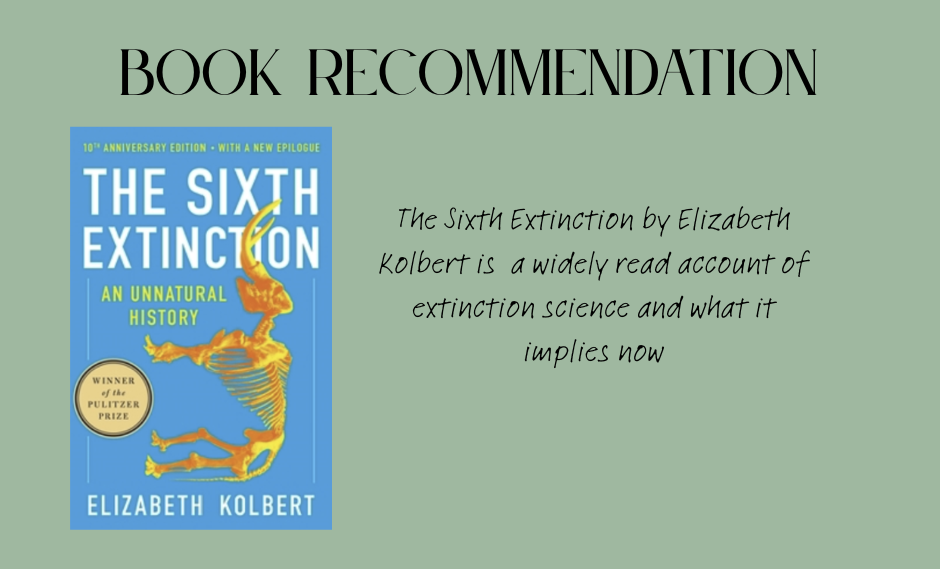
You are not a single species, you are an ecosystem
Most advice about transitions treats you like a lone animal making a brave leap. That’s thin.
In real life, “you” is an ecosystem:
your skills (what you can do)
your identity (who you believe you are)
your relationships (who reinforces that belief)
your environment (what rewards you)
your energy budget (what you can sustain)
A major life or career shift is rarely just quitting a job. It’s an ecological collapse and rebuild: networks change, status changes, routines change, internal story changes, future options reconfigure.
That’s why the emotional intensity can feel outsized. Your life isn’t “being dramatic.” It’s doing system-level work.
The End-Ordovician lesson: When the world cools, what worked stops working
The End-Ordovician extinction (~444 million years ago) is often linked to rapid cooling and sea-level change, with a very large fraction of species lost (commonly cited around 86%).
In human terms: this is the season when the external environment shifts and exposes fragility.
A reorg changes what’s valued.
A new leader arrives and the culture tilts.
A personal constraint appears (caregiving, health, geography, finances).
The market changes and your “safe” path isn’t safe anymore.
What dies here isn’t always your job. Often it’s your old strategy for safety: over-performing, pleasing, perfecting, waiting to be chosen.
Practice the “Cooling” diagnostic by asking, What has recently become harder to maintain? Not “what’s wrong with me,” but “what conditions changed?” That question stops you from treating a climate shift like a character flaw.
The Late Devonian lesson: Slow collapses are still collapses
The Late Devonian extinction was prolonged and complex, unfolding through multiple pulses (often framed as ~372–359 million years ago). This is the extinction style that doesn’t announce itself with one cinematic asteroid.
In life, this is the long, quiet erosion:
You “should” be grateful, but dread Monday.
You keep succeeding, but feel less like yourself each quarter.
Your role expands, but your autonomy shrinks.
You stop learning and start repeating.
These are the slow extinctions: not one loss, but the gradual disappearance of curiosity, meaning, or vitality.
Practice naming three things you no longer do that you used to do when you felt most alive. Then ask: Which one could return in a small form this month? Ecologies recover through small recolonizations, not grand speeches.
The Permian-Triassic lesson: Total collapse forces honest reinvention
The Permian-Triassic extinction (~252 million years ago) is often described as the most severe of the Big Five, with extreme biodiversity loss.
This is the life chapter you didn’t request:
layoff + identity shock
divorce + social world rearranged
grief + reality permanently altered
burnout + the nervous system vetoes your ambition
Here, “bounce back” is the wrong language. The ecosystem that supported the old you is gone. The task becomes:
stabilize what’s survivable
stop feeding what’s unsustainable
rebuild from what’s true now
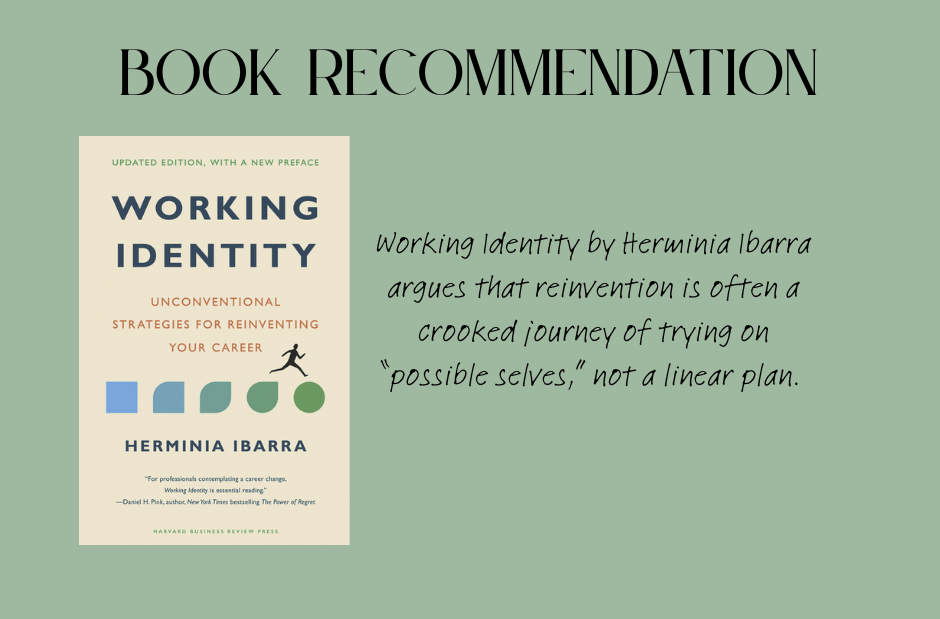
That idea is the antidote to perfectionism in transition. You don’t need the “right next identity” immediately. You need experiments with feedback.
The Triassic-Jurassic lesson: When volcanic stress builds, adaptation becomes selection
The Triassic-Jurassic extinction (~201 million years ago) is widely linked to major environmental disruption (often discussed in connection with large-scale volcanism and climate effects).
In personal terms, this is what happens when pressure becomes constant:
every week is a sprint
everything is urgent
your life becomes all output, no renewal
Under sustained stress, your life starts selecting for traits that keep you functioning but reduce your humanity: emotional flattening, disconnection, cynicism, tunnel vision.
Here’s the hard truth: some of what you call “your personality” is actually a stress adaptation. And it can go extinct too, if you change the conditions.
Reduce the selection pressure by picking one recurring demand and change the rule, not your willpower. Examples: meeting-free mornings, a smaller scope, a boundary with a stakeholder, a new cadence for communication.
Ecologies don’t recover because a species “tries harder.” They recover because conditions shift enough for different life to become possible.
The K-Pg lesson: The asteroid is sudden; the aftermath is the real story
The Cretaceous-Paleogene extinction (~66 million years ago) is famous because of the asteroid narrative and the disappearance of non-avian dinosaurs.
But the more useful metaphor for personal change is what came after: the long, disorienting rebalancing.
You can make a clean break and still feel lost.
That’s not failure. That’s ecology.
The “Neutral Zone”: where humans and Earth share the same awkward middle
If there’s one concept that bridges deep-time catastrophe and human transition, it’s the in-between phase: the period after the old world ends and before the new world stabilizes.
William Bridges’ transition model is famous for naming this: endings, a neutral zone, new beginnings.
The neutral zone is psychologically expensive because it removes the old identity before the new one is ready. You are functionally an ecosystem in renovation: walls down, wires exposed, dust everywhere.
Two things to know about the neutral zone:
It’s supposed to feel uncertain. Uncertainty is not evidence you chose wrong.
It’s also the most creative phase, because the old constraints have loosened.
“Adaptive radiation”: How a new you actually emerges
After extinctions, surviving lineages can diversify into newly available niches. In plain language: when competition and old constraints shift, new forms of life can flourish.
Your equivalent is not “finding your passion;” it’s building niches like:
a pilot project that tests a new strength
a community that reflects your values
a role adjacent to your past work (not a total leap)
a hobby that restores agency and identity outside achievement
A grounded warning: Don’t glamorize extinction
Earth’s mass extinctions were not self-actualization retreats. They were catastrophic. Likewise, personal upheaval can include real loss. The goal is not to say “everything happens for a reason.” The goal is to say:
upheaval changes conditions
changed conditions change what’s possible
possibility can be built deliberately
Transformation is not the consolation prize for suffering. It’s the skilled work of rebuilding after reality changes.
A Practical Framework: the Extinction-to-Renewal Playbook
Use this when you’re in a major transition and want something sturdier than vibes.
1) Name what ended (without negotiating). What is no longer true? What identity, routine, or role is gone?
2) Identify the “cause” in systems language. Was it a cooling (loss of support), a slow Devonian drift (erosion), a Permian collapse (total disruption), sustained Triassic pressure (chronic stress), or a K-Pg impact (sudden shock)? You’re not diagnosing - you’re choosing the right response style.
3) Stabilize the survivors. What still reliably gives energy, support, or competence? Protect it.
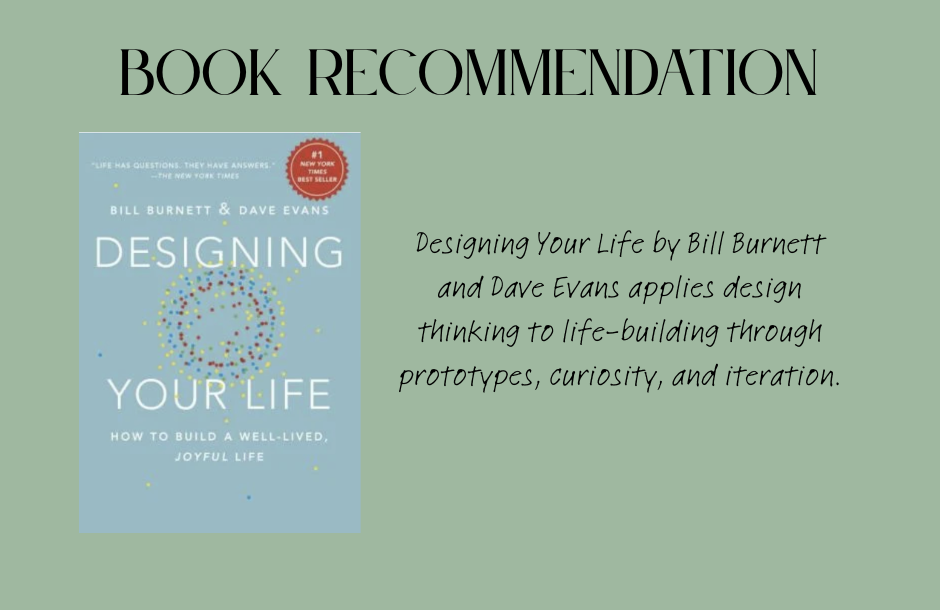
4) Prototype new niches. Small experiments with fast feedback beat one giant leap.
5) Let the new identity arrive by evidence. You become “someone who does X” by doing it repeatedly in conditions that reward it.
In the fossil record, extinction looks like absence. In lived experience, extinction often looks like emptiness, grief, or confusion. But absence is not nothing. Absence is space. And space is the prerequisite for a new arrangement of life.