
Not Every Seed Becomes a Garden
On Potential, Becoming, and the Quiet Work of Resilience
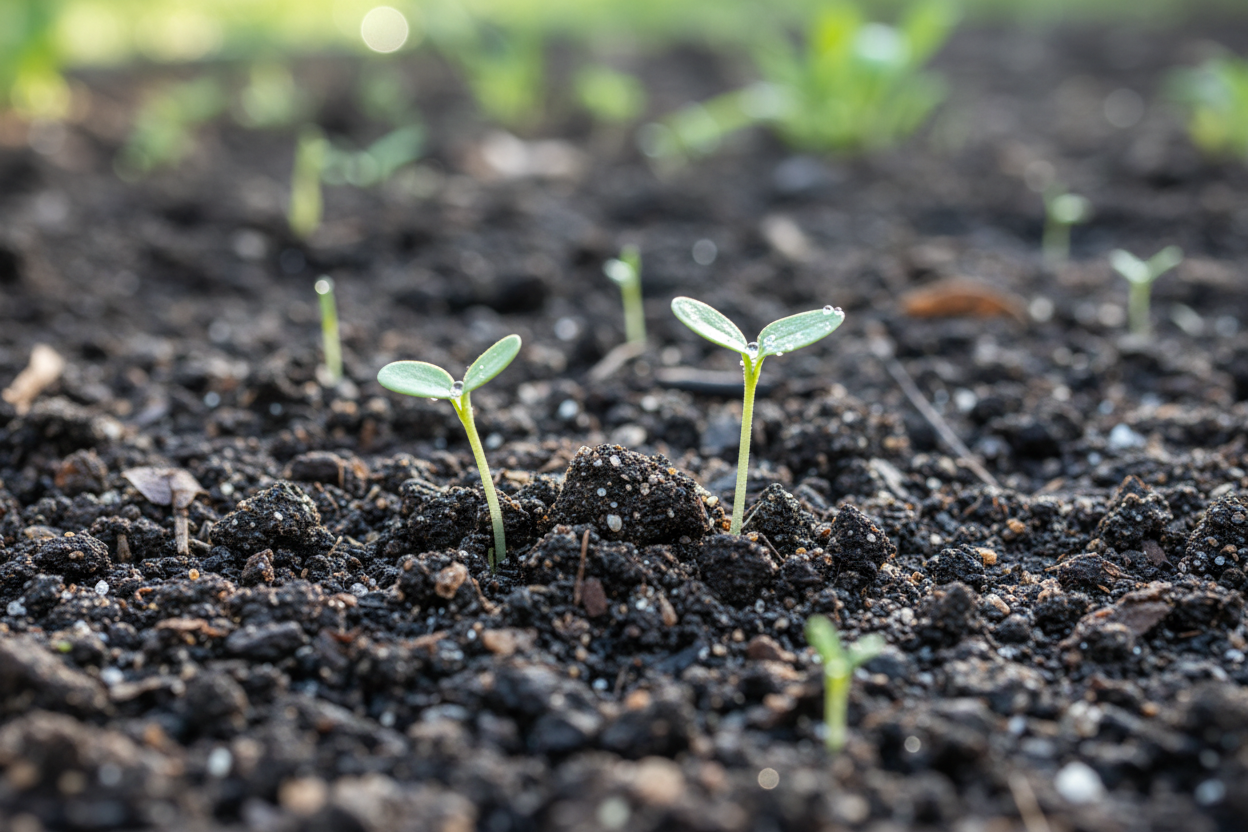
If you’ve ever planted a seed, you’ve held a small miracle in your hand.
A seed is a compact archive of possibility. It contains instructions for roots, stems, leaves, maybe even fruit. It carries a blueprint for becoming something more than it is.
And yet… not every seed sprouts. Some remain dormant. Some begin and stop. Some break open, reach toward the light, and still never become what we imagined.
Gardening, it turns out, is not a story of guaranteed outcomes. It is a story of conditions, timing, and care. And so is being human.
As I have been putting together my garden for the 2026 season, I am enjoying all the ways that gardens make me think.
The Myth of Guaranteed Potential
We are taught to believe in potential as if it were destiny.
We say things like:
“They have so much potential.”
“This opportunity could be everything.”
“This will grow into something great.”
But potential is not a promise. It is a possibility. A seed contains what could happen, not what will.
In psychology, this mirrors what researchers describe as probabilistic development. Human outcomes are shaped not by a single trait or moment, but by an interaction of environment, timing, stress, relationships, and internal states. In other words, growth is contextual, not guaranteed.
Just like a seed needs the right soil, light, and water, we need conditions that support development:
psychological safety
emotional regulation
resources and support
time
Without these, even the strongest potential can remain unrealized.
And this is where the story often fractures, because when something doesn’t grow, we tend to assume something is wrong with the seed.

When Growth Doesn’t Happen
A seed that doesn’t sprout is not a failure. It is a signal.
Maybe the soil was too compact. Maybe the temperature wasn’t right. Maybe it needed more time.
In human terms, this is where self-compassion becomes essential.
Self-compassion, as defined in psychological research, involves treating yourself with kindness, recognizing that struggle is part of shared human experience, and responding to difficulty with awareness rather than judgment.
And here’s what the research consistently shows:
Self-compassion reduces anxiety and depression
It improves emotional regulation
It strengthens resilience, helping people recover more effectively from setbacks
In fact, studies show that self-compassion is not just comforting—it is functional. It supports resilience by helping individuals adapt and recover in the face of adversity.
Without it, we interpret stalled growth as personal deficiency.
With it, we begin to ask better questions:
What conditions were missing?
What did I need that I didn’t have?
What might still be possible, just not in this form?
The Neuroscience of Starting Again
There is something quietly extraordinary happening in your brain when you choose compassion over criticism.
Self-criticism activates threat-related systems in the brain. It increases stress responses and cognitive load, making it harder to think clearly, learn, or adapt.
Self-compassion, on the other hand, creates a different internal environment.
Research shows that compassion-based practices are associated with changes in brain regions linked to emotion regulation and reward, including the prefrontal cortex and mesolimbic pathways.
It also:
improves attention and memory
reduces the cognitive burden of negative self-talk
supports more effective stress management
There’s a biological elegance to this. When the internal environment feels safe, the brain reallocates resources from survival to growth.
In other words, self-compassion is not soft. It is neurobiologically strategic.
Resilience Is Not About Forcing Growth
In gardening, you cannot force a seed to sprout by pulling on it. In life, resilience is often misunderstood the same way. We imagine resilience as pushing harder, enduring more, or refusing to stop.
But research tells a different story. Resilience is not just endurance. It is adaptation.
It is the ability to:
recalibrate after disruption
integrate new conditions
and continue forward, sometimes in a different direction
Interestingly, studies suggest that resilience emerges most strongly not from stress alone, nor from self-compassion alone, but from the interaction between the two.
Stress provides the pressure. Self-compassion provides the support. Together, they create the conditions for growth. Like rain and sunlight.
Some Seeds Become Something Else
Here is the part we don’t talk about enough: Not every seed becomes the plant you expected.
Sometimes a career path dissolves, a relationship doesn’t take root, or a version of yourself never fully forms. And yet, something still grows.
Maybe it’s insight.
Maybe it’s boundaries.
Maybe it’s a quieter, sturdier version of you.
In ecological systems, what doesn’t grow often still contributes. Seeds that don’t sprout enrich the soil. They become part of what allows future growth. Nothing is wasted.
The same is true for human experience.
A More Compassionate Definition of Potential
What if potential is not about becoming a specific outcome, but about remaining in relationship with possibility?
What if growth is not linear, but seasonal?
What if the measure of your life is not what flourished easily, but how you tended to what didn’t?
Self-compassion invites a different narrative:
You are not behind.
You are not broken.
You are in process.
And resilience is not the act of becoming everything you once imagined. It is the willingness to keep tending the soil, even after something didn’t grow.
If you were a seed in your own garden, how would you treat yourself? Would you shame yourself for not sprouting fast enough? Or would you check the soil, adjust the light, and offer a little more water?
Growth is not a performance. It is a relationship. And sometimes, the most powerful thing you can do is stay.
Stay with yourself. Stay with the process. Stay long enough to see what else might grow.